Tuesday, 30 October 2012

Different words for the same thing

I have noticed over the last few years that using the word or a derivative of the word “ortho” has become far less used in the world of product promotion and marketing. Shoes, beds and all manner of high end products would prefix the item with “orthopedic” to indicate a superior performance or a greater degree of design and support for their top end models. Now that term seems to be out of fashion and instead we are seeing other creations intended to mean the same thing but, I guess, in a more marketable way.
When it comes to shoes, “easy fit” and “comfort fit” now seem to mean the same thing and only a special diabetic shoe, or one for a person with serious foot problems, is termed orthopedic!

With beds too the same change seems to have occurred. “Wellbeing” seems to be the new buzzword, even though the implications of this double term seem even more medical and even more concerned with health than the old one.

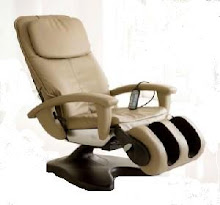
With chairs the same it true yet again. This time the word is “ergonomic” which is intended to mean a machine (or appliance) working in harmony with the body that sits on it. i.e. The chair is designed to work with both the person using it and any activity that they use that item of furniture for. This means that you can of course have an ergonomic TV seat.

Perhaps ergonomic shoes are the next step, or a comfort fit chair. There may even be room for a wellbeing shoe at some point in the future.
Health Blogs

Tuesday, 23 October 2012

From now on....


Unfortunately after editing a number of my posts on this blog it would seem that the ones that I amended have been reassigned the date on which I made the changes. In some cases this means that posts made 3 years ago appear as the most recent. This is down to blogger and not me!


In any event, my posts have been absent for some time and I now intend to rectify that. I will start off by restating what this blog was originally about and a couple of changes that have been made.


Firstly, the purpose of the blog was two fold. The main reason was to write about orthopedic products that can assist, ease or aid injury, disability or discomfort and the secondary reason was to promote some websites that I own. Regrettably, it would seem that doing the latter is now considered some kind of infringement by google and for that reason I will no longer be showing links to my or any other related information sources. It all seems quite ridiculous, but these days google seem to be inventing new ways to make their search engine less like a human reader and more like a former eastern European police force.


What I will still be doing is writing posts about a number of different orthopedic products that exist, are in development or are simply of interest to me. Not surprisingly the likes of beds and mattresses will be near the top of the list, but I will also try to write about some of the more obscure and interesting devices and products that people can use.

Friday, 4 May 2012

Moving home - why not buy a new bed

Buying a house for the first time, or even looking at moving home, is often a good time to change or replace furniture and one item worth considering is a bed – or beds if you have multiple bedrooms.
A good quality mattress can last for many years, but cheaper ones can start to show signs of wear quickly and if this is the case, getting a new one can be done during the move. You simply ditch the old one when you move out and have a new one delivered to your new home. You will even save on the time and expense of carriage.

If you do decide to make a change, then you need to think about what to buy. Ask yourself some questions like, were you happy with what you had before, was it comfortable, did you sleep well and so on.

Also think about how long it lasted and, if there are two of you in a double or king size bed, did you both feel the same way about it?
If it is a long time since you last bought a bed you may not be familiar with some of the more modern products like memory foam, latex foam and mattresses that have a mix of springs and foams. There is a lot of choice and it can be daunting!

So what should you look at?

Firstly, if you were happy with what you had before, go for something similar. Never change a winning formula, or change something that you like.

If on the other hand you were not happy with what you had before, take a look at something different. In other words if you had a cheap innerspring mattress why not look at a pocket spring model or a memory foam one. Foam mattresses look and feel very different to those made with springs and a lot of people think that they are a blessing. Go to a store, try one out, and then think about your decision.

Again, if you are about to move house this might all seem like the wrong time to do this. But moving home is stressful and occupying your mind with other decisions may actually make the move easier.

Health Blogs

Wednesday, 18 April 2012

Mattress innovations

Staying with the theme of beds from my last post, some fairly new and almost radical mattress designs have appeared over the last few years. Many of these innovations have come about through the need to come up with better orthopedic mattress beds and the Octafoam model is a prime example.

The Octafoam mattress has a build of memory foam, but the bed is not solid. Rather it has the same composition as a pocket spring mattress, only the springs are formed out of the visco elastic or memory foam.

All told this is quite radical and it compares with the use of gel in the top layer of mattresses by companies like Kaymed. Kaymed specialise in what many would describe as therapy or orthopedic quality beds and they mix memory foam, gel and latex in some of their mattresses.

Even with the apparently straightforward memory foam bed things are not as simple as they first appear. Most beds of this type are not made from a single slab of foam, but rather a series of different foam layers that are bonded together. Each of these layers serves a different purpose and the lower layers are known as base layers or support layers. The high quality memory foam is found at the top level of one of these mattresses.

There is no doubt that bed manufacturers are constantly trying to find the next big thing. They are also more highly motivated by the fact that with the online revolution, it is now as easy for a manufacturer to sell online as it is for a traditional retailer. This means that any innovations, new inventions or industry changing research benefits them more than ever before.

What is next in the mattress world is a matter of speculation. As far as an orthopedic mattress is concerned there is no doubt that the waterbed still offers the closest thing to floating support – ultimately you are floating. Despite this, no mainstream manufacturer seems keen to pursue the waterbed principle as a primary product. No doubt one will at some point and when they do the mattress world will change again.

For now the main beds are springs, be they continuous or pocket, memory foam, be it in layers, slabs or shaped like springs, latex foam, with its cool feel, gel, with an even cooler feel, water, perfect for support, and air, used mainly in hospital applications, or for temporary inflatable put-me-up bed uses.

Then of course there are adjustable and electric beds, but that is moving away from the intrinsic mattress material and into mechanisation and personal customisation. I might write more about that next time.

Health Blogs

Tuesday, 10 April 2012

Bedding, mattresses, associated products, delivery etc

One of the big changes to occur with the online sale of beds is the selling of every conceivable bed related product from the same company on the same website and in the same virtual basket.

When only high street retailers were around the problem was showroom space and storage space, however with an online store the showroom is virtual, limitless and capable of housing an infinitesimal number of items. The result is that valuable space does not need to be reserved for beds and mattresses only.

Virtual stores now sell everything, so beds and mattresses, whilst being the big sellers, are just one product line. This means that headboards and duvets are in the mix (not surprisingly), but so too are chests of drawers, wardrobes, sofa beds, pillows and many other bedroom related products.

The other good thing about this is that next day delivery is offered by many online retailers, but only if you reach a certain spend level. By being able to top up your purchases with sundries like pillows or a bedside cabinet, means that it become easy to reach the threshold of free next day delivery.

Delivery is also a big selling factor with many of the bed retailers who sell online. They tend to have large warehouse complexes that store thousands of beds and bed related items and because they deliver direct this makes the next day delivery option possible.

One downside to the online store is a general lack of up markets mattress products. These stores flourish on selling cheap and budget priced beds and this means that they do not tend to stock too many orthopedic mattresses. Equally, many bed manufacturers do not allow their “top of the range” mattress and bed items to be sold through online shops that have an association with the cheaper end of the market. This means that you can get standard memory foam beds, but finding a multi layer orthopedic memory foam mattress may be more difficult.
Health Blogs

Friday, 30 March 2012

Shoes- fashion and healthy

Crocs are one of a number of shoe types that bridge the fashion health shoe divide. The others are the trainer or sneaker and more recently the five fingers shoe and the shoe with the curved sole.

The trainer style shoe continues to evolve and develop and there are many designs, colour and performance levels. Some of these shoes look like sports shoes, but their cost lets you know that the orthopedic design and assembly quality is missing.

With the likes of the five fingers shoe and crocs there is a very different design approach. These shoes have looks that, on the face of it, appear to blow in the face of fashion. But today fashion takes its cues from not only the catwalk, but what sportsmen and women wear and what looks outdoorish or sporty.

The result is that some of these very unusual looking shoes command not only high prices, but high customer loyalty and desirability. This is why five fingers shoes can cost well over a hundred UK pounds, US dollars, or EU euros. They look odd, but that is their appeal and that in turn seems to make them fashionable.

The other side to this fashion element is that it results in a number of copy cat companies taking the look and style of these shoes and then making a cut price version that appears similar, but has none of the orthopedic features, high quality materials or durability. These copy shoes always have a market, but they damage the reputation of the real shoe’s good name and they steal sales.

To get more of an idea of what is and is not a proper orthopedic shoe you can check out a few websites out , they will give some idea of the scope of healthy shoes that are currently available.
Health Blogs

Sunday, 18 March 2012

Mattress toppers

There are many different products that can help to improve a night’s sleep and the mattress topper is definitely one of them.

Mattress toppers have become increasingly popular over recent years for a number of different reasons. One is because they can potentially improve the nature of a bed’s sleeping properties. Another is most probably because of the introduction of a number of materials like memory foam and latex foam that can be used in a foam mattress topper.

The foam mattress topper can be filled with standard foam, memory foam or latex foam. In most cases what you get is a slab of foam that is placed directly on top of the bed and attached using anything from fabric ties to hook and loop or Velcro. There are some other fixing systems. Once in position the topper provides a further stratum of cushioning on top of the original mattress and this quite naturally provides some extra comfort.

The most popular foam mattress toppers are those made of memory foam. The reason for this is that these toppers can be laid on a spring constructed mattress and they then add the sleeping advantages of memory foam. This is a simple and easy way to make a spring bed into a bed that mixes springs and foam and which would ordinarily cost much more money. The advantages is therefore a double one. Firstly that of improving the bed’s comfort and secondly doing so at far less cost than would be involved in buying a new bed or mattress.

One situation where a mattress topper is not a good idea is when an existing mattress has become problematic. Toppers cannot resurrect failing mattresses and they cannot and will not disguise hard spots, broken or damaged springs, or a dipping mattress. In these cases the only solution is to replace the damaged bed with a new one.

Instances where a topper will be a good idea include the following: When some of the features of a foam bed are desired for a mattress made of springs; Where an upgrade of a mattress is wanted, but not affordable; Where someone would like an innerspring mattress to have less lateral movement and feel like a more expensive mattress; When someone would like to be able to take their mattress with them on business trips, holiday, or stays in another home – here the topper can be rolled up and taken with them.

Naturally there are many other situations where a mattress topper may be seen as desirable and there are many different topper types and fillings to choose from. In addition to memory foam and latex there are toppers made with feathers and down and natural wool. Some will even have a scent or aroma impregnated into the topper to help create a restful atmosphere.
Health Blogs

Monday, 13 February 2012

It is some time since I wrote about orthopedic chairs, so that will be the subject of this post.

Chairs that adopt some version of orthopedic design vary quite considerably from those that use the principals of good support, upright posture and general health to those that are more specific and help people to stand up or sit back down.

Then there are stairlift chairs which, although not really orthopedic or therapy chairs, do serve a very specific purpose for anyone with a mobility restriction. For that reason they also require a mention.

The main categories of what are often termed “orthopedic chairs” fall into the following classifications.

The healthy orthopedic chair – which is a high backed, high seated chair with good support, firm but contoured cushioning and a solid construction.

The ergonomic office chair or task chair – intended for use in a working environment by people who perform their jobs from a seated position.

The riser recliner chair – that has motors that enable it to raise the person seated on it to a “close to” standing position.

Each of these chairs does a very important job and all do have some similarities like good back support, a suitable seat height from the floor level and the ability to help in a task or activity, even if it is a sedentary one.

Each chair also tries to maintain health, improve health or prevent injury through its design and/or function.
On an aside, another interesting product, this time associated with the mattress, is the foam topper thats sits on a mattress. These toppers can also have orthopedic qualities, though in this case applied to someone who is lying down rather than in a seated position. Toppers can enhance the way in which a bed provides support to the body and memory foam toppers have become very popular.

The memory foam found in toppers and mattresses is also starting to become available in some orthopedic and task chairs. This should make these chairs more comfortable for anyone who spends a lot of time sat down.

Health Blogs

Tuesday, 24 January 2012

Special pillows

Twenty years ago most people slept on either a feather and down pillow or a standard foam pillow. Things have changed in the last two decades and now materials like visco elastic memory foam and latex are common pillow filling materials and they offer what is considered to be superior orthopedic support.

Modern foams though are not the only options when it comes to selecting something a little bit different. At the extreme end of the spectrum there are pillows filled with animal hair and there are also pillows that are stuffed with dried grassed and other vegetation. These are very much niche pillows and appeal to a very limited number of people.

More common are some of the pillows that claim a therapy effect on the person sleeping on them. These can be pillows that are infused with an odour like lavender, or that have a filling that is composed of a very un-bed-like material.

One example of the above is bamboo which in both its dried and burnt form is becoming a popular bedding material (for mattress and pillow uses).

Bamboo has a number of traits that lend it to pillow applications. Firstly it has long been appreciated that it feels cool and that this makes it ideal in hot environments. With modern fabric making technologies this means that it can be processed and interlaced into a length of cloth and then stitched to make a pillow case.

When burnt, bamboo (as charcoal) has some additional properties that see it cleanse the air, produce negative ions and, according to some, make getting to sleep easier.

The other good thing about the bamboo charcoal is that it can be impregnated into other materials like memory foam and latex foam so that the advantages of the therapy can be combined with the qualities of orthopedic support. These pillows are becoming increasingly popular and they can be bought at many of the better chain stores. They come in standard designs and they do not look or feel out of place in any bedroom.

These days there are many different pillow fillers, so check out all of the options and selections. Naturally trying pillows out, in terms of feel and odour, is the best way to determine if they are right for you.


Health Blogs

Friday, 2 December 2011

Orthopedic footwear

One of the most overlooked orthopedic products are shoes. One of the reasons for this is probably because when you hear the term “orthopedic shoes” the vision of large cumbersome and attention grabbing shoes come to mind.

Shoes fitting this description are still around, but they tend to be worn by the elderly, people with foot deformities or people at risk from diabetes. Even then far more conventional looking shoes are often available.

Every day orthopedic shoes are intended to be worn by anyone and everyone who gives a priority to the health and welfare of their feet. This type of orthopedic shoe, sometimes called a comfort shoe or an easy fit shoe, is an everyday pair of shoes that you wear for work, for walking around or for simply sitting around. This type of footwear has a design that supports the feet and offers padding and cushioning in all of the right places.

The appearance too is pretty standard. Some minor concessions to conventional design can include the replacement of laces with hook and loop Velcro fasteners and an outer sole that has a wedge sole rather than one with a heel, but these features are barely noticeable.

Materials can be natural leather or one of the breathable fabrics that stretch and contract with the feet. Styles are rarely the height of fashion, but this type of orthopedic shoe never stands out, looks out of place or appears dated.

The obvious question is who are these shoes designed for and who should wear them?

The answer is just about everyone. These shoes are nothing more than well designed and well made footwear and they will look after the feet of a healthy child or an elderly and not too healthy adult.

Orthopedic shoes do not have to have a specific look. In actualisation, most good quality hiking shoes are designed with the same approach as a more normal looking orthopedic shoe and the same can be said for some of the better training shoes and cross trainers (or sneakers).

Some more unusual “orthopedic shoes” can be found online and in some stores. The “five finger shoe” is one example and here the design takes a radial re-visit of shoe design and how the shoe works with the foot. The result is something very different , both to look at and to wear.

Health Blogs

Monday, 14 November 2011

Types of bed and bed frame

I have frequently mentioned different mattress materials and products like memory foam and latex foam, all of which are important components in the make up of a bed. What I do not seem to have mentioned is the bed frame that supports the mattress and which also plays a part in the way that the body is supported during sleep.

The actual bed (not the mattress part), often called a frame or base, is the foundation of the surface on which we sleep and as such it is very important. A poor or failing bed frame will result in a poor night’s sleep however good the mattress, so the frame is important.

Bed frames come in two general forms, the first being the old style visible frame and the second being one of the divan style frames. Both are popular and both work well, but in different ways.
In the case of the divan, the construction of the bed frame is hidden and enclosed behind an aesthetic box-like surround that makes the bed appear solid.

In the case of a more traditional frame, all parts of the frame’s footboard, headboard, legs and any side detailing remain visible.

Advantages and disadvantages of each system

The divan has a very big advantage over the normal open frame and that is its ability to act as a storage area. The majority of divan beds have drawers and these drawers give access and storage to the large area under the bed. In simple terms the dead space beneath the area where you sleep can be used store anything from clothes and Christmas decorations to bed sheets and spare pillows. These divan drawers are a bit like having a horizontal chest of drawers laid across the floor.

Unlike the divan, the bed frame is open, lower and without any kind of storage area beneath or within it. In this way it loses ground against the divan – at least if saving or using space is at a premium.

Where the bed frame does beat its rival is in its style, variety and independence of mattress partner.

Bed frames can be wood or metal, low or high, large or small, plain or decorative, cheap or expensive, light or heavy…. And the list goes on.

The big advantage of the bed frame is in its style and they way that it can be selected to become the visual centre piece of any bedroom. Bed frames do not need to be hidden or disguised. Instead they can be used to make a statement about a bedroom and they also have the flexibility to hold almost any mattress. This means that you are not restricted to the mattress that came with the divan, nor is there a fabric finish that will only match the mattress-divan set.

In terms of performance, which is best between the divan and the frame is an unanswerable question. In both cases quality varies considerably and in both cases an orthopedic mattress can be used with the bed base.

Health Blogs

Thursday, 27 October 2011

Beds that are not beds!

The term bed is often used for something that may not necessarily mean what we normally expect it to mean.

Most dictionaries describe a bed as an item of furniture on which we lie down with a view to resting or going to sleep. Many go one step further and add that it has a mattress, usually made with springs or foam, and that it is rectangular and comes in single or double bed formats.

This is of course the normal description and expectation of a bed, however there are a couple of other items of furniture that also take the name, but which do not really fit the definition given above.

The first is the sun longer or garden sun bed. This is used for relaxation, but most people think of it as a way of getting a sun tan on a sunny day and not a means of going to sleep or resting. Sun loungers come in different forms, but all are used in the same way and with the same “browning the skin” objective.

The other type of bed, also concerned with the sun, is the sunbed.

Sunbeds are not really beds at all and the sole function of this type of bed is the tanning of the skin.

Quite how the sunbed got its name is open to speculation, but the fact that you lay down horizontally on it is the most probable explanation.

Moving away from any kind of bed that a person uses you do of course have the flower bed. This however is a bed of a very different nature, but the term is still extended and derived to describe the flowers that are planted in it – namely “bedding plants”. Indeed you even “bed in” the bedding plants when planting them!

Ultimately, like many terms and expressions, “bed” and its derivatives have a number of interpretations based on context and form and the bed on which we sleep is just one.

More about “proper” beds and the important mattresses that we sleep on can be found by researching on the net and in stores. The orthopedic properties, traits and features that are desirable in good beds are explained in detail for each of the different bed and mattress types.

For those more interested in flower beds, here is a picture of one.

Health Blogs

Monday, 24 October 2011

Different types of chair

It is amazing how many different types of chair variation there are. Chairs of one sort or another have been sourced or designed for just about every purpose conceivable from the wheelchair to the lounger chair found in the sitting room or family room.

At one end of the spectrum you will find chairs aimed very much at sitting down and relaxing whilst watching TV, reading or listening to music, whilst at the other end of the scale you have chairs that have been put together for a functional reason. This may be to operate a computer, play on a gaming console (with sound and even vibration provided by the chair), or for some skilled trade occupation.

One of the advances of modern technology is the specialisation of different chair uses. Once upon a time an easy chair was and easy chair and a high backed dining style chair was just that. Now however, there are chairs that offer therapies like heat and massage and chairs that have reclining features, or motors that assist with the getting up and sitting down activity. Ultimately there is a chair for everything.

A good selection of the alternative chair options can be found by exploring furnishing stores and mobility and health stores where a number of the chairs described above may be displayed. Still more developed and customised chairs include those designed into a stairlift. These special lifts make it possible for someone who struggles with steps and stairs to travel effortlessly from one floor level to another without assistance.

Adjustable chairs have become increasingly good sellers, particularly when it comes to task chairs. These are chairs that are intended for the fulfilment of a particular job or activity and the adjustable features make the customizing of the chair’s set-up specific to anyone using it. The number and variety of adjustments vary from chair to chair and the more you pay the more you get.

So how many different chair variations and models are there? Well there are chairs for babies and children, chairs for cars with accessories, backrests, bolsters and cushions. Then there are chairs for outdoors and the garden, or even the beach. You also have special chairs that enable emergency services to get injured or disabled people out of buildings with stairs or danger. There are chairs that are designed to look good and fit into a certain environment or room, e.g. a bedroom chair, and then there are general chairs that will do for just about anything.

Ultimately there are a lot of chairs and variations on seats of all descriptions.
Health Blogs

Tuesday, 18 October 2011

Mattress materials and systems

Continuing on from the last post looking at therapeutic beds, this post will look at the different mattresses that form the support on which a person sleeps.

Not too long ago mattresses were limited to springs or coils that, along with padding and ticking, constituted the mattress body. These days things have moved on and we now have a myriad of different mattress types from which to choose.

In addition to springs there is foam and this was, for many years, seen as a cheap and inferior product. That all changed with the arrival of visco elastic foam, commonly known as memory foam, and we now have Talalay latex foam too.

In addition to the foams there are some old style mattress filling materials like feather and down, organic wool and there are even some companies who make mattresses with a filling that is derived from grass.

The most popular mattress remains the one that uses springs and there are two versions of the sprung mattress. The cheap and cheerful one uses innersprings that interconnect and have what is termed a “low spring count”. The second has pocket springs that work independently and the beds that use this type of spring have a much higher spring count (i.e. number of springs in a bed/mattress).

Foams cannot have a measure like a spring count, so instead they are graded by either density or firmness. Both of these metrics make it possible to get an idea of how hard or spongy the mattress surface will be.

Trying to compare one mattress material or product with another is never easy as each has its own unusual set of properties. There is also the problem of trying to define one as being better than another which again is difficult because the differences do not necessarily relate to something being better or worse. Comparative information about the various mattress options can be found via manufacturers and retaillers. It attempts to relate the different properties of each mattress type against another in an informative way.

Another mattress type, not mentioned above, is the water bed and you can also find air beds with controllable hydraulic inflation. Beds and mattresses can of course include other features like electric adjustment, vibration or massage and gentle heat. These can be found on some of the more expensive therapeutic or wellbeing beds.

The next post will continue the theme of mattress related products or products with an orthopedic slant to them.

Health Blogs

Thursday, 22 September 2011

Therapeutic and bariatric beds

My first post in a while and it is back to one of my favoured subjects which is beds and mattresses of the orthopedic variety.

As previous posts have pointed out there are many different bed designs and mattress materials and fillers and all have a place depending on individual requirements and budgets.

This time I will make some observations and comments on adjustable beds and therapeutic beds, both of which are used in the medical and care sectors as well as in the home. These tend to be beds for dependency patients, people who spend prolonged periods of time in bed, or people who are recovering from an accident, injury, or procedure and for whom rest is critical to their recovery.

Therapeutic beds are usually beds based around wellbeing and providing the best possible support to the resting body, or beds intended to offer some kind of direct therapy like massage. A bed termed a “therapy bed” is more usually a bed from which a manual therapy is delivered by a practitioner and this is normally differentiated as being dissimilar to a therapeutic bed.

So what can you expect from a therapeutic bed? Well just about anything as the description is pretty open ended.

Many therapeutic bed types have memory foam mattresses and they may have some kind of frame based adjustment, often to enable the raising or lowering of the bed, or even to enable the incline of the backrest to be varied. This option may also apply to the leg support part of the bed and mattress. These adjustments can be electric or manually powered.

More exotic features can include embedded heaters to warm up the mattress and bedding and even special motors that can simulate a massage. Some massage features even allow the selection from a number of different massage techniques and timers allow the massage period to be preset.

High dependency beds tend to move away from the “luxury” features bed to a more practical bed design. These beds take into account the fact that a carer may be working with a patient and need constant access to all parts of the bed area. These beds focus on height adjustment to enable patient comfort, movement and ingress at a suitable level.


A further type of therapeutic bed, and one that is rapidly increasing in popularity and demand, is the bariatric bed (an oversized heavy duty bed). Bariatric beds are special bed and mattress combinations that have been developed for very large and heavy people. These people are often referred to as obese, however in the medical profession they are part of an area of medical care called bariatrics. Bariatrics looks at the care, treatment and aids that can be used to make the life of very overweight people easier, healthier and more like that of normal sized individuals. Methods include treatments and procedures, diet and exercise advice and the provision of assistive aids and furniture of which the bariatric bed is one example.

Further reading on these wellbeing and care focussed beds can be found by using the links provided in the text. There is a considerable amount of information covering all of the variations of orthopedic, therapeutic and body supporting beds accessible from these pages.

Finally, if you have not given serious thought to the health of your back and how your body recovers and regenerates during the night, you should. If you do you will discover that good sleep, aided by a good bed and mattress, is critical to a long and healthy life.
Health Blogs

Thursday, 4 August 2011

Swimming

Swimming is of course one of the best ways to stay healthy and also one of the best ways to rehabilitate many injuries.

Swimming has a zero impact effect on the body, so joints, ligaments and tendons do not suffer. Furthermore, it gives a real all-body workout that means that almost any swimming stroke will exercise and tone every muscle from those of the fingers and toes to the large abdominals.

The constant pressure of the water also ensures that resistance is constant, but equally that swimming need not be overly strained or tiring. How hard you swim and how long you choose to swim for will determine the level of your workout. Even swimming for pleasure and simply moving around in water works the muscles.

All told this makes swimming an exercise that is sympathetic with orthopedics and good for all round health. It is also a readily available way to get exercise as swimming pools are located in towns and cities in almost every country of the western world.

Swimming options include municipal pools, pools at Spa complexes and swimming in open water. The latter can include the sea, or even lakes and rivers. However, all open water can be dangerous and should only attract the strong swimmer who is aware of their limitations as well as being conscious of the water conditions, e.g. temperature, depth etc.

Swimming regularly is the best way to build up good strength and stamina and to work the joints and keep them mobile and free. For some, one option is to have their own private swimming pool. These pools need not be as expensive as one might at first think and they can often be situated outdoors and use heaters and filtration systems to keep the water temperature comfortable and the pool water clean and hygienic.

Having your own pool makes swimming at any time a possibility and by using a pool enclosure it is possible and practical to swim at any time of year in comfort and relative warmth.

The basic kit needed for pool ownership requires the pool structure (this “may” require excavation) plus a number of ancillary items. These items include a proper filtration system which in turn necessitates a pump to feed water through it and this can also be used to circulate heated up water that is warmed by a pool heater.

The pool will additionally require a special lining which can be tiles or a vinyl liner and then there are cleaning aids which come in the form of devices and chemicals.

Once set up most pools are fairly easy to maintain, however in the case of outside pools it is important to keep heat in and debris out and this will usually necessitate the use of a solar pool cover. This covers up and protects the pool and pool water. With an internal pool the protection element is not as important.
Health Blogs

Friday, 27 May 2011

Technological developments in physical human aids

Somewhere along the line I have managed to miss posting on this blog for over a month, so I will rectify the situation now with a new post.

The subject of this post is related to orthopedic based products, however it is perhaps more directly connected with products in the mobility and health sector. The nature of the product types that I am covering are those which have benefited from some kind of automation, power-assistance, computer technology or other technological intervention. In other words products very much connected with overcoming mobility, movement or disability, but with a modern twist.

As little as 20 or 30 years ago very few products falling into the classification of “human aids” were what could be described as technologically advanced. An obvious example is the wheelchair which, up until quite recently, had seen little in the way of advancement. Indeed the number of aids was very limited and this meant that those with any kind of limiting physical condition had to rely to a significant degree on carers or family members for help.

Things have now changed and items like wheelchairs come in powered formats and, in addition, there is a range of mobility scooters, some of which are even road worthy.

Other large body moving aids like stairlifts and bathlifts have also become very affordable and they are now common place in many homes. These large aids enable someone who has limited mobility to retain their independence for longer. They can only exist because of the advances made in miniaturising motors and developing advanced and controllable robotics.

The large aids are however only one area where advancements in technology have seen benefits.

Many small scale aids have also emerged and most of these solve the smaller, but still challenging, tasks of daily life. A good example is the can, bottle top and tin opener that requires only a single touch to activate it. This device can be a massive aid to those who find opening a tin, or screwing the top off a bottle difficult.

Technology also rears its head when it comes to measurements and providing readings. A good example of this would be a blood sugar alarm for those suffering from diabetes. These alarms use advanced sensors, digital components and audible sounds to notify the wearer that their blood sugar level has dropped to a point where action needs to be taken. Prior to these aids, regular blood tests were the only reliable warning option.

More information relating to the large number of health aids that fall into this category can be fou by looking in mobility stores and websites and there are now developments taking place on a continual basis which see new aids emerging all of the time.

New trends in aid development include features like miniaturisation and the ability to obtain very accurate readings and measurements using equipment with digital interfaces and small computer like processors.
Health Blogs

Tuesday, 22 March 2011

Some general observations

I wrote about the new concept of five fingers shoes back in December last year and, at that time, I thought that these clever shoe designs would really take off.

Well, in the UK at least they have not. Exactly why this is the case is impossible to tell, but my guess is that a mix of a very high prices (i.e. over £100/pair), the need for special socks (e.g. over £10/pair), and a lack of any real marketing publicity, has kept their profile low. At the same time stores are never keen to stock high priced products without proper advertising campaigns to back them up.

Naturally is it far from being too late for these shoes to take off, but they certainly seem to be stagnating at the moment and the prospect of buying shoes (that you cannot try on) on the web is not everyone’s first choice.

Even so, they remain a product to watch with interest.

I mentioned a couple of years back that I was trying out a gel mouse mat, i.e. one of those with a wrist rest that elevates the hand. At the time I thought that it was pretty good. But I now notice that I have in fact tuned it around so that the gel pad is out of the way and no longer in use.

I must have done this without consciously noticing, but it suggests that I prefer the basic mat design without the extra protruding pad.

On to beds, mattresses and bedding products, and another observation that I can make is that 3 or 4 years ago there were plenty of Latex mattresses and pillows. I personally consider the latex foam to be superior to visco elastic memory foam, however others clearly do not as latex seems to have all but disappeared.

Again, I suspect that a failure in marketing (when compared to memory foam) is at the heart of the problem. In any event, getting hold of a latex pillow is now all but impossible.
So far this year there have been no great new innovations in the world of orthopedic products. This in itself is not that unusual as real innovation is a rare thing. However, the re-packaging of something that already exists as “the next big thing” is not. Even so this has yet to happen in 2011. There is of course plenty of time left for that to happen.

Finally, I wonder to what extent the (UK) TV comedy show “Benidorm” has increased mobility scooter sales to those who don’t really need them.

It would seem that we have moved from a position where only the mobility challenged would ride them - to where they became viewed as also being a bariatric aid - and now they are for everyone, even those with no mobility restriction at all.

It just shows how perceptions change. One minute something is perceived as a disability aid, and the next minute it is the latest “must have” accessory.
Health Blogs

Friday, 4 February 2011

Is a cheap mattress worth the money?

This is actually a very important question because why should you spend several hundred pounds on a product that you could buy for £99 (or $99) or less.

So, when it comes to a mattress do you get what you pay for, or is it all hype?

A good mattress gets its value from a number of factors. They include - the quality of the materials, the quality of its construction (build), and the way in which it has been designed.

Mattress materials include springs, foams, fillings, fabrics and in some cases latex and even magnets or water. The more materials there are in the mattress, combined with the complexity of assembling it, the more expensive it will be. High quality materials naturally add more to the cost of the mattress. This is why orthopedic quality mattresses cost more than many others.

So the general picture quickly becomes one of getting what you pay for. In other words if you “buy cheap” you will get a product utilising cheap materials, a simple and low quality build or assembly and the technology in the mattress will be very limited.

Mark-up on beds and mattresses, and especially orthopedic beds, is usually a standard percentage, but this of course means that the more the mattress costs to make, the more the mark-up will be. Again this is another factor that cause a disproportional increase in the value of a cheap versus a more expensive mattress.

So should you buy a cheap mattresses or a more expensive model?

If you want quality, comfort and value over a long period of time (i.e. probably over 10 years), then you should spend a significant amount of money wisely. A cheap mattress is very much a short term solution. It will save you money now, but you will be back in the market place looking for a replacement in 2 to 4 years. This however, is the way that some people like it and, so long as you do not sleep on a failing mattress, you can adopt this “buy and replace” approach.

So what is the big difference between cheap and expensive?

The difference between a budget mattress and an expensive mattress is the life expectancy that you can expect before comfort, support and build quality break down.

A cheap mattress “can” provide a good level of comfort, but it will have a comparatively short user-life. So, if you work out “mattress worth” based on a formula using the number of years use that you get from it, you become aware that cheap beds actually have a similar “annual cost” to expensive ones.

In simple terms the saving of buying a cheap mattress over an expensive one is not a saving at all if you look at all of your mattress purchases over the long term.

Health Blogs

Monday, 10 January 2011

A couple of unusual ideas/devices

I have just been looking at a site covering what it describes as “WALKING AID Orthopedic Devices”. These “aids” are very space-age in appearance although, at a first glance, I was not quite sure what their orthopedic properties actually were.

On a closer inspection and, having read the information, they are automated walkers for children or adults who have a condition like cerebral palsy, or who are recovering or in rehabilitation from an accident or injury. What I liked most about these devices is the fact that they look good and would draw attention for reasons of style rather than reasons of disability. The page in question is here - http://psipunk.com/walking-aid-orthopedic-device-by-luke-forward/. The pictures are diagrammatic and they indicate one of the devices in use.

Something else!

At second item of orthopedic interest that I have been taking a look at is an orthopedic mouse. This is of course a computer mouse, but even so, how one makes it orthopedic is quite a question. The answer however can be seen on this page http://www.agadget.net/orthopedic-mouse/ and I for one quite like the idea behind it.

The way it works is quite novel. Rather than moving the mouse right or left, or up or down to move the mouse curser across the screen you simply tilt the mouse.

This works because the mouse is in fact in a fixed (non-movable) position. However the functioning and ergonomic section of the mouse (the bit you hold) is elevated above its base and literally rocks in any direction based on where you want your mouse curser to go. That is, you tilt forward to move up the screen, backwards to move down the screen and left or right to mimic that direction. During all of these small movements the mouse stays glued to its spot meaning that you always have it located in your most personally ergonomic position.

Other than that, all of the other functions of the mouse are conventional in operation, so it is simple to learn and use. So how much does it cost and is it currently available – I have no idea.
Health Blogs