Monday, 13 February 2012

It is some time since I wrote about orthopedic chairs, so that will be the subject of this post.

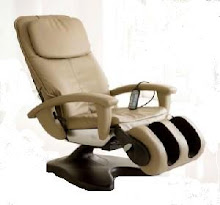
Chairs that adopt some version of orthopedic design vary quite considerably from those that use the principals of good support, upright posture and general health to those that are more specific and help people to stand up or sit back down.

Then there are stairlift chairs which, although not really orthopedic or therapy chairs, do serve a very specific purpose for anyone with a mobility restriction. For that reason they also require a mention.

The main categories of what are often termed “orthopedic chairs” fall into the following classifications.

The healthy orthopedic chair – which is a high backed, high seated chair with good support, firm but contoured cushioning and a solid construction.

The ergonomic office chair or task chair – intended for use in a working environment by people who perform their jobs from a seated position.

The riser recliner chair – that has motors that enable it to raise the person seated on it to a “close to” standing position.

Each of these chairs does a very important job and all do have some similarities like good back support, a suitable seat height from the floor level and the ability to help in a task or activity, even if it is a sedentary one.

Each chair also tries to maintain health, improve health or prevent injury through its design and/or function.
On an aside, another interesting product, this time associated with the mattress, is the foam topper thats sits on a mattress. These toppers can also have orthopedic qualities, though in this case applied to someone who is lying down rather than in a seated position. Toppers can enhance the way in which a bed provides support to the body and memory foam toppers have become very popular.

The memory foam found in toppers and mattresses is also starting to become available in some orthopedic and task chairs. This should make these chairs more comfortable for anyone who spends a lot of time sat down.

Health Blogs

Tuesday, 24 January 2012

Special pillows

Twenty years ago most people slept on either a feather and down pillow or a standard foam pillow. Things have changed in the last two decades and now materials like visco elastic memory foam and latex are common pillow filling materials and they offer what is considered to be superior orthopedic support.

Modern foams though are not the only options when it comes to selecting something a little bit different. At the extreme end of the spectrum there are pillows filled with animal hair and there are also pillows that are stuffed with dried grassed and other vegetation. These are very much niche pillows and appeal to a very limited number of people.

More common are some of the pillows that claim a therapy effect on the person sleeping on them. These can be pillows that are infused with an odour like lavender, or that have a filling that is composed of a very un-bed-like material.

One example of the above is bamboo which in both its dried and burnt form is becoming a popular bedding material (for mattress and pillow uses).

Bamboo has a number of traits that lend it to pillow applications. Firstly it has long been appreciated that it feels cool and that this makes it ideal in hot environments. With modern fabric making technologies this means that it can be processed and interlaced into a length of cloth and then stitched to make a pillow case.

When burnt, bamboo (as charcoal) has some additional properties that see it cleanse the air, produce negative ions and, according to some, make getting to sleep easier.

The other good thing about the bamboo charcoal is that it can be impregnated into other materials like memory foam and latex foam so that the advantages of the therapy can be combined with the qualities of orthopedic support. These pillows are becoming increasingly popular and they can be bought at many of the better chain stores. They come in standard designs and they do not look or feel out of place in any bedroom.

These days there are many different pillow fillers, so check out all of the options and selections. Naturally trying pillows out, in terms of feel and odour, is the best way to determine if they are right for you.


Health Blogs

Friday, 2 December 2011

Orthopedic footwear

One of the most overlooked orthopedic products are shoes. One of the reasons for this is probably because when you hear the term “orthopedic shoes” the vision of large cumbersome and attention grabbing shoes come to mind.

Shoes fitting this description are still around, but they tend to be worn by the elderly, people with foot deformities or people at risk from diabetes. Even then far more conventional looking shoes are often available.

Every day orthopedic shoes are intended to be worn by anyone and everyone who gives a priority to the health and welfare of their feet. This type of orthopedic shoe, sometimes called a comfort shoe or an easy fit shoe, is an everyday pair of shoes that you wear for work, for walking around or for simply sitting around. This type of footwear has a design that supports the feet and offers padding and cushioning in all of the right places.

The appearance too is pretty standard. Some minor concessions to conventional design can include the replacement of laces with hook and loop Velcro fasteners and an outer sole that has a wedge sole rather than one with a heel, but these features are barely noticeable.

Materials can be natural leather or one of the breathable fabrics that stretch and contract with the feet. Styles are rarely the height of fashion, but this type of orthopedic shoe never stands out, looks out of place or appears dated.

The obvious question is who are these shoes designed for and who should wear them?

The answer is just about everyone. These shoes are nothing more than well designed and well made footwear and they will look after the feet of a healthy child or an elderly and not too healthy adult.

Orthopedic shoes do not have to have a specific look. In actualisation, most good quality hiking shoes are designed with the same approach as a more normal looking orthopedic shoe and the same can be said for some of the better training shoes and cross trainers (or sneakers).

Some more unusual “orthopedic shoes” can be found online and in some stores. The “five finger shoe” is one example and here the design takes a radial re-visit of shoe design and how the shoe works with the foot. The result is something very different , both to look at and to wear.

Health Blogs

Monday, 14 November 2011

Types of bed and bed frame

I have frequently mentioned different mattress materials and products like memory foam and latex foam, all of which are important components in the make up of a bed. What I do not seem to have mentioned is the bed frame that supports the mattress and which also plays a part in the way that the body is supported during sleep.

The actual bed (not the mattress part), often called a frame or base, is the foundation of the surface on which we sleep and as such it is very important. A poor or failing bed frame will result in a poor night’s sleep however good the mattress, so the frame is important.

Bed frames come in two general forms, the first being the old style visible frame and the second being one of the divan style frames. Both are popular and both work well, but in different ways.
In the case of the divan, the construction of the bed frame is hidden and enclosed behind an aesthetic box-like surround that makes the bed appear solid.

In the case of a more traditional frame, all parts of the frame’s footboard, headboard, legs and any side detailing remain visible.

Advantages and disadvantages of each system

The divan has a very big advantage over the normal open frame and that is its ability to act as a storage area. The majority of divan beds have drawers and these drawers give access and storage to the large area under the bed. In simple terms the dead space beneath the area where you sleep can be used store anything from clothes and Christmas decorations to bed sheets and spare pillows. These divan drawers are a bit like having a horizontal chest of drawers laid across the floor.

Unlike the divan, the bed frame is open, lower and without any kind of storage area beneath or within it. In this way it loses ground against the divan – at least if saving or using space is at a premium.

Where the bed frame does beat its rival is in its style, variety and independence of mattress partner.

Bed frames can be wood or metal, low or high, large or small, plain or decorative, cheap or expensive, light or heavy…. And the list goes on.

The big advantage of the bed frame is in its style and they way that it can be selected to become the visual centre piece of any bedroom. Bed frames do not need to be hidden or disguised. Instead they can be used to make a statement about a bedroom and they also have the flexibility to hold almost any mattress. This means that you are not restricted to the mattress that came with the divan, nor is there a fabric finish that will only match the mattress-divan set.

In terms of performance, which is best between the divan and the frame is an unanswerable question. In both cases quality varies considerably and in both cases an orthopedic mattress can be used with the bed base.

Health Blogs

Thursday, 27 October 2011

Beds that are not beds!

The term bed is often used for something that may not necessarily mean what we normally expect it to mean.

Most dictionaries describe a bed as an item of furniture on which we lie down with a view to resting or going to sleep. Many go one step further and add that it has a mattress, usually made with springs or foam, and that it is rectangular and comes in single or double bed formats.

This is of course the normal description and expectation of a bed, however there are a couple of other items of furniture that also take the name, but which do not really fit the definition given above.

The first is the sun longer or garden sun bed. This is used for relaxation, but most people think of it as a way of getting a sun tan on a sunny day and not a means of going to sleep or resting. Sun loungers come in different forms, but all are used in the same way and with the same “browning the skin” objective.

The other type of bed, also concerned with the sun, is the sunbed.

Sunbeds are not really beds at all and the sole function of this type of bed is the tanning of the skin.

Quite how the sunbed got its name is open to speculation, but the fact that you lay down horizontally on it is the most probable explanation.

Moving away from any kind of bed that a person uses you do of course have the flower bed. This however is a bed of a very different nature, but the term is still extended and derived to describe the flowers that are planted in it – namely “bedding plants”. Indeed you even “bed in” the bedding plants when planting them!

Ultimately, like many terms and expressions, “bed” and its derivatives have a number of interpretations based on context and form and the bed on which we sleep is just one.

More about “proper” beds and the important mattresses that we sleep on can be found by researching on the net and in stores. The orthopedic properties, traits and features that are desirable in good beds are explained in detail for each of the different bed and mattress types.

For those more interested in flower beds, here is a picture of one.

Health Blogs

Monday, 24 October 2011

Different types of chair

It is amazing how many different types of chair variation there are. Chairs of one sort or another have been sourced or designed for just about every purpose conceivable from the wheelchair to the lounger chair found in the sitting room or family room.

At one end of the spectrum you will find chairs aimed very much at sitting down and relaxing whilst watching TV, reading or listening to music, whilst at the other end of the scale you have chairs that have been put together for a functional reason. This may be to operate a computer, play on a gaming console (with sound and even vibration provided by the chair), or for some skilled trade occupation.

One of the advances of modern technology is the specialisation of different chair uses. Once upon a time an easy chair was and easy chair and a high backed dining style chair was just that. Now however, there are chairs that offer therapies like heat and massage and chairs that have reclining features, or motors that assist with the getting up and sitting down activity. Ultimately there is a chair for everything.

A good selection of the alternative chair options can be found by exploring furnishing stores and mobility and health stores where a number of the chairs described above may be displayed. Still more developed and customised chairs include those designed into a stairlift. These special lifts make it possible for someone who struggles with steps and stairs to travel effortlessly from one floor level to another without assistance.

Adjustable chairs have become increasingly good sellers, particularly when it comes to task chairs. These are chairs that are intended for the fulfilment of a particular job or activity and the adjustable features make the customizing of the chair’s set-up specific to anyone using it. The number and variety of adjustments vary from chair to chair and the more you pay the more you get.

So how many different chair variations and models are there? Well there are chairs for babies and children, chairs for cars with accessories, backrests, bolsters and cushions. Then there are chairs for outdoors and the garden, or even the beach. You also have special chairs that enable emergency services to get injured or disabled people out of buildings with stairs or danger. There are chairs that are designed to look good and fit into a certain environment or room, e.g. a bedroom chair, and then there are general chairs that will do for just about anything.

Ultimately there are a lot of chairs and variations on seats of all descriptions.
Health Blogs

Tuesday, 18 October 2011

Mattress materials and systems

Continuing on from the last post looking at therapeutic beds, this post will look at the different mattresses that form the support on which a person sleeps.

Not too long ago mattresses were limited to springs or coils that, along with padding and ticking, constituted the mattress body. These days things have moved on and we now have a myriad of different mattress types from which to choose.

In addition to springs there is foam and this was, for many years, seen as a cheap and inferior product. That all changed with the arrival of visco elastic foam, commonly known as memory foam, and we now have Talalay latex foam too.

In addition to the foams there are some old style mattress filling materials like feather and down, organic wool and there are even some companies who make mattresses with a filling that is derived from grass.

The most popular mattress remains the one that uses springs and there are two versions of the sprung mattress. The cheap and cheerful one uses innersprings that interconnect and have what is termed a “low spring count”. The second has pocket springs that work independently and the beds that use this type of spring have a much higher spring count (i.e. number of springs in a bed/mattress).

Foams cannot have a measure like a spring count, so instead they are graded by either density or firmness. Both of these metrics make it possible to get an idea of how hard or spongy the mattress surface will be.

Trying to compare one mattress material or product with another is never easy as each has its own unusual set of properties. There is also the problem of trying to define one as being better than another which again is difficult because the differences do not necessarily relate to something being better or worse. Comparative information about the various mattress options can be found via manufacturers and retaillers. It attempts to relate the different properties of each mattress type against another in an informative way.

Another mattress type, not mentioned above, is the water bed and you can also find air beds with controllable hydraulic inflation. Beds and mattresses can of course include other features like electric adjustment, vibration or massage and gentle heat. These can be found on some of the more expensive therapeutic or wellbeing beds.

The next post will continue the theme of mattress related products or products with an orthopedic slant to them.

Health Blogs